The Great Digital Erasure: Why Fan Creativity Is Quietly Disappearing and Who's Fighting to Save It
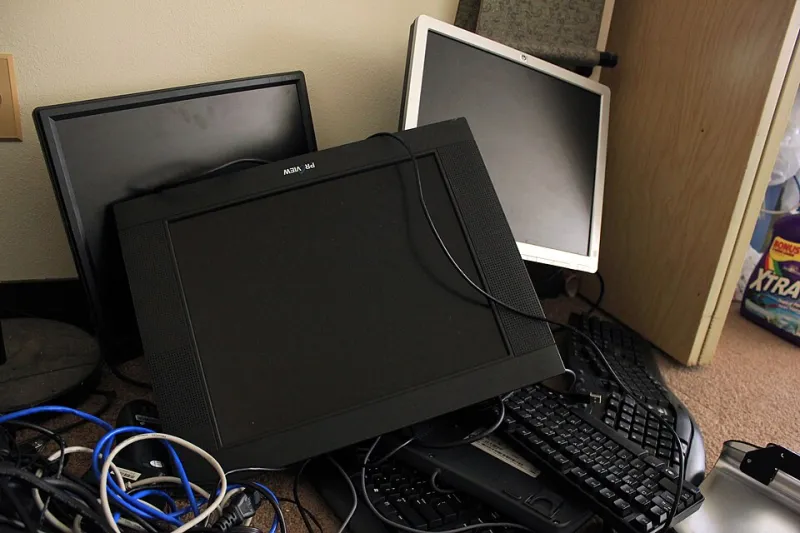
Photo: Yinan Chen, Public Domain, via Wikimedia Commons
Somewhere on a server that no longer exists, there's a 200,000-word fanfic about a TV show that got canceled in 2003. It had a dedicated readership. It had sequel threads and fan art spin-offs. It had the kind of deeply invested community that modern entertainment companies spend millions trying to manufacture. And now it's just gone.
This isn't a rare story. It's basically the default story.
The Slow Rot Nobody Talks About
When people talk about losing pieces of the internet, they usually mean memes or viral videos — stuff that feels disposable even when it's beloved. But fan-created work operates differently. Fanfiction, fan art, fan edits, and fan videos aren't accidental byproducts of pop culture. They're deliberate acts of creative labor. Someone sat down, built something, and put it out into the world for free because they loved a story enough to extend it.
And those things are disappearing at a genuinely alarming rate.
FanFiction.net — once the undisputed king of the space — has been quietly pruning content for years, often without warning or appeal. LiveJournal, which hosted enormous fandom communities throughout the 2000s, gutted its US user base after being sold to a Russian media company, taking decades of creative work with it. Yahoo Groups, which ran hundreds of dedicated fandom mailing lists, shut down entirely in 2019 and took its archives offline. Tumblr's 2018 NSFW content purge wiped out massive amounts of fan art, including plenty of work that wasn't even explicit — just caught in the algorithmic crossfire.
The pattern is consistent: platforms change hands, update their terms of service, or just stop caring. And the creative communities that built homes there get evicted with little notice and nowhere obvious to go.
Why Fandom History Is Actually Cultural History
Here's the argument that the archivists are making, and it's a strong one: fan creativity isn't peripheral to pop culture. In a lot of cases, it is the culture.
The fanfic communities that grew up around early Harry Potter weren't just filling time between books. They were developing writers, building friendships across state lines, experimenting with narrative structure and representation in ways the source material wasn't willing to. Some of the most widely discussed conversations around race, gender, and queerness in mainstream fiction happened first in fandom spaces, years before those topics broke into the broader cultural conversation.
Same goes for fan videos. The AMV (Anime Music Video) scene of the late 90s and early 2000s was a genuine art form — editors working with pirated software and consumer-grade hardware to create stuff that holds up aesthetically even now. A lot of it is gone. The rest is scattered across aging YouTube accounts and personal hard drives that could fail at any moment.
When that work disappears, we don't just lose the files. We lose the record of how real people engaged with the stories they loved. That's not nothing.
The Archivists Building the Lifeboat
The response from inside fandom has been to build infrastructure that the mainstream internet never bothered to create.
The Archive of Our Own — AO3, if you live in the fandom world — is probably the most successful example. Built and maintained by the Organization for Transformative Works, a nonprofit staffed almost entirely by volunteers, AO3 exists specifically to be a stable, long-term home for fan creativity. It has an explicit preservation mandate. It doesn't run ads. It doesn't answer to a corporate parent looking for a quarterly return. It's funded by its own community through donation drives that routinely hit their goals within hours.
But AO3 is one platform, and the problem is much bigger than one platform can solve. Fanlore, a wiki also maintained by OTW, is trying to document fandom history more broadly — tracking communities, terminology, major events, and the social context around creative works that the works themselves don't capture. It's the kind of project that sounds obscure until you realize it's doing what no university archive or library has thought to do.
Then there are the individual efforts. Fans running personal archiving projects, downloading and cataloging old fanfic before sites go dark. Discord servers where people share links to Wayback Machine captures of deleted accounts. Reddit threads dedicated to tracking down specific lost works, treating the recovery of a single old story like a genuine archaeological dig.
The Wayback Machine Problem
The Internet Archive's Wayback Machine gets brought up constantly in these conversations, and it's genuinely valuable — but it has real limits. It crawls publicly accessible pages, which means anything behind a login or a paywall is mostly invisible to it. A lot of fandom content lived in exactly those spaces: locked LiveJournal entries, private forum sections, closed Facebook groups.
And even for content the Wayback Machine did capture, finding it requires knowing exactly where to look. There's no search layer that makes it usable the way a real archive would be. It's more like a pile of snapshots than a functioning library.
The fans building their own projects understand this. They're not just saving files — they're building metadata, adding tags and context, creating the kind of findability infrastructure that makes an archive actually useful decades down the line.
What Gets Lost When the Files Go
There's a version of this conversation that stays abstract — cultural heritage, digital preservation, the historical record. All of that is real. But the more immediate loss is simpler and harder to articulate.
For a lot of people, specific fanfics or fan art pieces were formative. They found a story at fourteen that helped them understand something about themselves. They read a fan-written continuation of a cancelled show that gave them actual closure. They found a community around a piece of fan creativity that became their first real sense of belonging online.
When that work disappears, it's not just a file that's gone. It's a piece of someone's history that can't be recovered. And because fandom has never been taken seriously as a cultural space by the people who run the platforms it lives on, there's been no systematic effort to protect it.
The fans doing this work are essentially saying: if nobody else is going to treat this as worth saving, we will.
The Collector Instinct Applied to Digital Space
There's something deeply familiar about this to anyone who's spent time in physical collector culture. The same impulse that drives someone to track down a rare VHS pressing or a first-edition comic drives the fan archivist to spend three hours navigating the Wayback Machine looking for a story that disappeared in 2011. It's the recognition that something has value even when the market doesn't acknowledge it. Especially when the market doesn't acknowledge it.
The difference is that physical objects degrade slowly and visibly. Digital content can vanish overnight, without warning, without a paper trail. The urgency is different. The window for preservation is narrower.
The people doing this work are racing a clock that most of the internet doesn't know is running. And they're doing it the same way fan communities have always done everything — for free, out of love, because nobody else was going to.