Mall Rats with Shovels: The Salvage Collectors Digging Treasure Out of America's Retail Graves

There's a particular smell to a closing mall store. Dust, old carpet adhesive, and something vaguely chemical from decades of fluorescent lighting. Most people walk past the yellow liquidation signs without a second thought. But for a specific, quietly obsessive breed of collector, that smell is basically a starter pistol.
These are the mall salvagers — and they are absolutely out here doing the Lord's work.
What Corporate Liquidators Leave Behind
Here's the thing about big-box retail liquidation: it's designed to move volume fast, not to understand what it's selling. When a Circuit City, FYE, or Suncoast Video shutters, the company hired to clear the floor is working on a tight timeline. They're tagging merchandise in bulk, pricing by category, and getting out. Nobody on that crew is stopping to recognize that a shrink-wrapped copy of the Evangelion theatrical film on Japanese import LaserDisc is worth more than the $4.99 sticker they just slapped on it.
That's the gap these collectors exploit — not maliciously, but out of pure, encyclopedic knowledge that nobody else in the room has.
Dave, a 38-year-old from outside Columbus who asked us not to use his last name, has been doing this since his early twenties. He describes himself as a "retail archaeologist," which sounds like a joke until he starts listing what he's found. "I pulled a still-sealed Voltron die-cast set from a storage room in a closing Sears," he told us. "The liquidation company had it boxed with old printer cables. They had no idea."
That set moved for over $600 on a private collector forum. The printer cables went in the trash.
The Mall as a Time Capsule
American retail malls are quietly collapsing at a rate that should probably alarm more people. Dead and dying malls now number in the hundreds across the country, and the stores inside them — many of which haven't meaningfully updated their inventory systems since the early 2000s — are essentially frozen in amber. The back stockrooms are the real prize.
Collectors who've been doing this long enough have learned to ask specific questions when a store closure is announced. Not "what's on the floor" but "what's been in the back for fifteen years that nobody touched." Overstock from cancelled promotions. Regional exclusives that never sold through. Merchandise tied to movies that bombed theatrically but became cult classics on home video.
One woman in the Pacific Northwest — she goes by "Cassette Ghost" in collector circles — specializes specifically in music and entertainment retail salvage. She described finding an entire unopened case of bootleg-adjacent concert merchandise from a mid-nineties tour, still in its original shipping box, in the basement storage of a closing Coconuts Music. "The liquidators thought it was unsellable promotional stuff," she said. "I knew exactly what it was the second I saw the font on the box."
That font recognition? That's years of deeply weird, deeply specific obsession paying off in the most satisfying way possible.
Building the Network
This isn't a solo operation for most people. The mall salvage community runs on a loose, trust-based network of regional scouts, specialist buyers, and resellers who communicate through private Discord servers, old-school forums, and group chats that newcomers don't just stumble into.
Information is the real currency. Who knows when a store is closing before the public announcement? Who has a contact at the liquidation company? Who knows which regional Suncoast locations were part of a distribution chain that stocked Japanese imports in the late nineties? These questions sound niche to the point of absurdity, but within the network, they're worth real money.
The ethics of the operation vary depending on who you ask. Some collectors see themselves as preservationists first — they want the stuff in the hands of people who understand what it is, not crushed in a dumpster or sold to a general reseller who'll mislabel it on eBay. Others are more transactional about it. Most fall somewhere in the middle: they love the material, they love the hunt, and they're not above making a few hundred dollars when something rare surfaces.
What They're Actually Finding
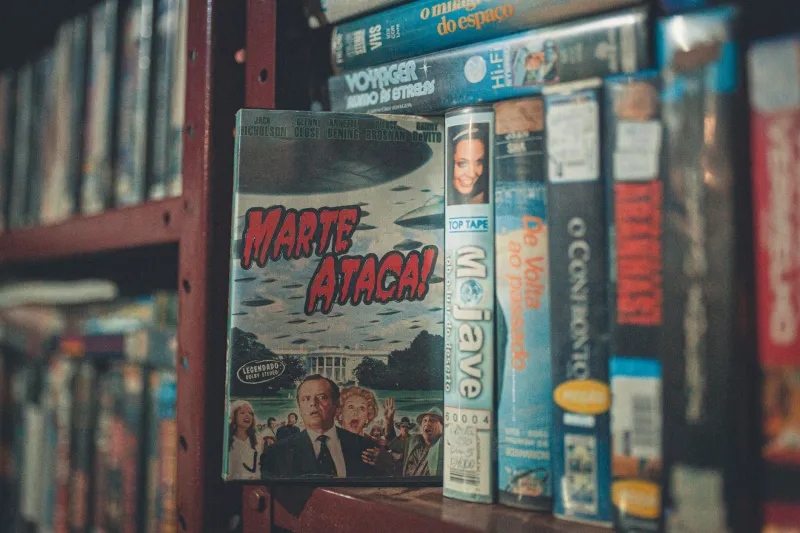
The inventory reads like a fever dream of nineties and early-2000s pop culture. Sealed action figures from toy lines that got cancelled mid-run. Promo VHS tapes that were sent to retailers but never officially sold. Anime merchandise imported from Japan for specialty stores that closed before moving through their stock. Limited-edition game peripherals. Regional concert bootlegs on cassette that circulated through music shops in specific metro areas.
Some of the most valuable finds are the ones that were considered worthless at the time — promotional items, in-store display pieces, point-of-purchase materials. A standee for a 1997 anime film that flopped on US release is now a legitimate collectible. The cardboard display case for a limited-edition PlayStation bundle, if it's intact, can move for serious money in the right circles.
Dave put it simply: "The stuff that was too weird to sell is exactly the stuff that survived. Nobody bought it, so nobody damaged it. It just sat in a box."
Outrunning the Algorithm
What's interesting about this whole ecosystem is how deliberately it operates outside the platforms that would normally govern this kind of commerce. eBay exists, sure, and stuff does move through there. But the real transactions — the significant finds, the rare pieces — happen in spaces that general resellers and algorithmic buyers can't easily access.
This is intentional. The moment a specific type of item shows up consistently on eBay, bots and bulk resellers start targeting it. Prices spike artificially, and the people who actually care about the material get priced out. The private network model keeps that from happening, at least partially.
It also creates a community with actual stakes. When Cassette Ghost finds something she can't identify, she posts it to her network and gets fifteen responses within an hour from people who've dedicated portions of their brains to exactly this knowledge. That's not something you get from a search engine.
Why It Matters Beyond the Money
Here's the part that the purely transactional read on this community misses: a significant portion of what these collectors are rescuing would simply be gone otherwise. Not in a collection somewhere, not digitized, not documented — just gone. Crushed, landfilled, or dissolved into the general noise of estate sale junk.
The entertainment industry has a complicated relationship with its own history. Studios lose masters. Labels let catalogs expire. Toy companies don't maintain archives of every regional variant they produced in 1994. The physical artifacts that survived — the merchandise, the promotional materials, the import editions — exist precisely because they were overlooked. And now a loose network of obsessives is making sure they stay overlooked by the wrong people and found by the right ones.
Mall archaeology isn't glamorous. It involves a lot of driving to depressing parking lots, a lot of conversations with tired liquidation staff, and occasionally a lot of dust in your sinuses. But the finds are real, the community is tight, and the stuff they're pulling out of those back rooms is genuinely irreplaceable.
America's malls are dying. Might as well make sure the good stuff doesn't go down with them.