Soldering in the Dark: Meet the Hobbyists Keeping Dead Gaming Hardware Alive
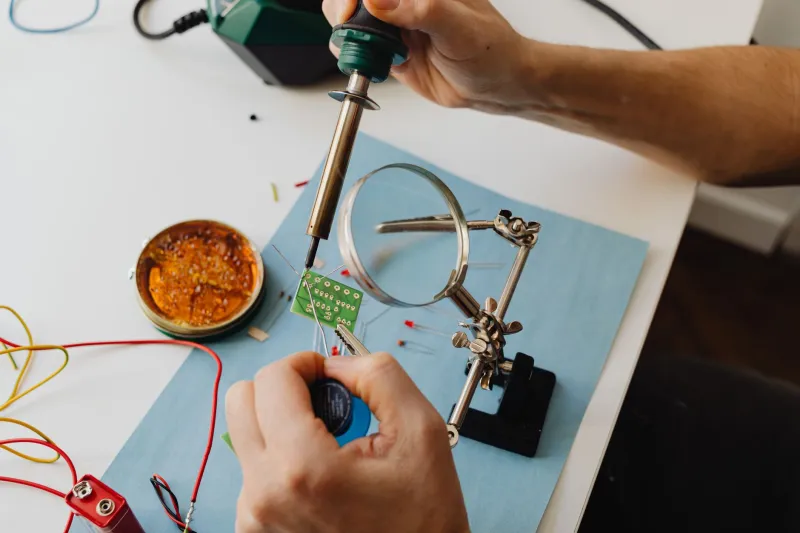
There's a guy in rural Ohio who spends most of his weekends hunched over a workbench covered in dead Super Nintendo cartridges. His tools look like something between a dentist's tray and a bomb disposal kit. His parts bin is a graveyard of donor boards, capacitors, and battery cells sourced from corners of the internet that don't exactly advertise on Google. He goes by the handle CapacitorKing on a handful of Discord servers and forum threads, and he's probably saved more gaming history than any museum you've ever visited.
He's not alone. Scattered across the US — in basements, spare bedrooms, and actual garages — there's a loose, mostly anonymous community of hardware repair hobbyists doing work that nobody hired them to do, for hardware nobody officially supports anymore. Call them what you want: cartridge surgeons, hardware necromancers, ROM medics. They're the reason your childhood copy of EarthBound or that arcade PCB you found at an estate sale might actually still run.
The Problem Nobody at Nintendo Is Solving
Here's the thing about retro gaming hardware: it was never built to last forever. Cartridge batteries die. Capacitors leak. Solder joints crack. The custom chips that powered the SNES, the Neo Geo, the original Game Boy — those aren't being manufactured anymore. When they fail, there's no official support line to call, no warranty to invoke, no authorized repair center that'll take your 1991 PCB seriously.
Game publishers have largely moved on. The conversation in the industry right now is about subscription libraries, remasters, and digital storefronts. Physical preservation? That's not a revenue stream, so it's not a priority. What that means in practice is that an enormous chunk of gaming history is quietly rotting on shelves, in storage units, and in the collections of people who don't yet know what they've got.
That vacuum is exactly where the cartridge surgery community lives.
Reverse Engineering as a Love Language
The repair work these folks do isn't simple. It's not swapping a dead AA battery and calling it a day. Some of the most common jobs involve replacing the coin-cell batteries inside save-capable cartridges — if yours hasn't been done in the last decade, your Pokémon Red save file is already gone — but that's basically the entry-level stuff. The deeper you go, the weirder it gets.
Some hobbyists specialize in arcade PCB repair, which means tracing faults on boards that were designed in the early '80s by engineers who are long retired or gone. There are no service manuals for most of this stuff, or if there are, they're in Japanese, or they were never digitized, or they're floating around as barely legible scans on some ancient forum thread from 2003. Figuring out why a Galaga board is throwing garbage on screen means reading schematics, using logic analyzers, and sometimes just knowing through hard experience what a failing custom chip looks like.
Others focus on the physical cartridge itself — cleaning corroded contacts, reballing solder joints under magnification, replacing cracked plastic shells with donor housings sourced from broken copies of lesser-valued games. There's a whole micro-economy around donor carts, and the community has strong opinions about what counts as ethical parts sourcing versus what crosses the line into destroying something irreplaceable.
The Supply Chain Problem (And How They Solve It)
Finding parts is its own subculture. The components that powered late '80s and '90s gaming hardware were standard-issue electronics at the time — capacitors, resistors, voltage regulators — but sourcing the exact spec you need for a 30-year-old board isn't always as simple as hitting up Digi-Key. Some chips are genuinely out of production. Some are available only through gray-market suppliers in Asia. Some can only be harvested from other dead boards.
Community members share sourcing tips obsessively. There are spreadsheets floating around Discord servers that map out which chip on a dead Street Fighter II board can be replaced by a modern equivalent, and at what cost. eBay lots of broken hardware get passed around like treasure maps. One repair specialist described buying a lot of forty broken Game Boys specifically to harvest the LCD driver chips, which had become nearly impossible to source new.
It's a shadow economy, but it's a functional one — and it's held together almost entirely by trust and shared obsession.
The Ethics Are Complicated (And Everyone Knows It)
Not every conversation in this community is easy. There's real tension around reproduction cartridges — boards that use modern flash memory to run ROM dumps of original games. The repair crowd is split. Some see it as a practical preservation tool, a way to keep games accessible when originals are too fragile or too expensive to use regularly. Others think it muddies the water, especially when reproductions get passed off as originals to unsuspecting buyers.
There's also the question of what you do when a repair requires sacrificing one original to save another. If you've got two broken copies of the same rare game and enough working parts between them to make one good one, is that preservation or destruction? The community debates this stuff constantly, and there's no clean answer.
What most people in this space agree on is that the alternative — doing nothing — is worse. Hardware doesn't get more stable sitting in a box. The window to save some of this stuff is closing, and nobody with official resources seems particularly motivated to step through it.
Why This Matters Beyond Nostalgia
It's easy to frame this as pure nostalgia — adults who want to play the games they grew up with. And sure, that's part of it. But the cartridge surgery community is doing something that has real cultural weight. Video games are art, and a meaningful portion of that art exists only on physical hardware that was never meant to survive this long. When a board dies and nobody fixes it, that's not just a collector's loss. It's a gap in the record.
Museums like the Strong National Museum of Play in Rochester, NY, are doing serious preservation work, but they can't reach everything. The underground repair community operates at a scale and a granularity that institutions simply can't match. They're in the long tail — fixing the regional arcade oddities, the obscure Japanese imports, the hardware variants that never made it into any official archive.
CapacitorKing in Ohio probably doesn't think of himself as a cultural preservationist. He thinks of himself as a guy who hates seeing good hardware die. But the difference between those two things might be smaller than it looks from the outside.
If you've got a dead cartridge or a board that hasn't powered on since the Clinton administration, these are the people you want to find. They're not hard to locate if you know where to look — Discord, Reddit, the right forum threads. They'll probably fix your thing for parts cost and a little goodwill. And they'll do it better than anyone you could've paid.