Weekend Warriors With Film Scanners: The Unsung Heroes Saving America's Home Movies

Photo: Lina Studer filmed it in Switzerland - FilmFix.com performed the film transfer of the 8mm original film in HD., CC BY-SA 4.0, via Wikimedia Commons
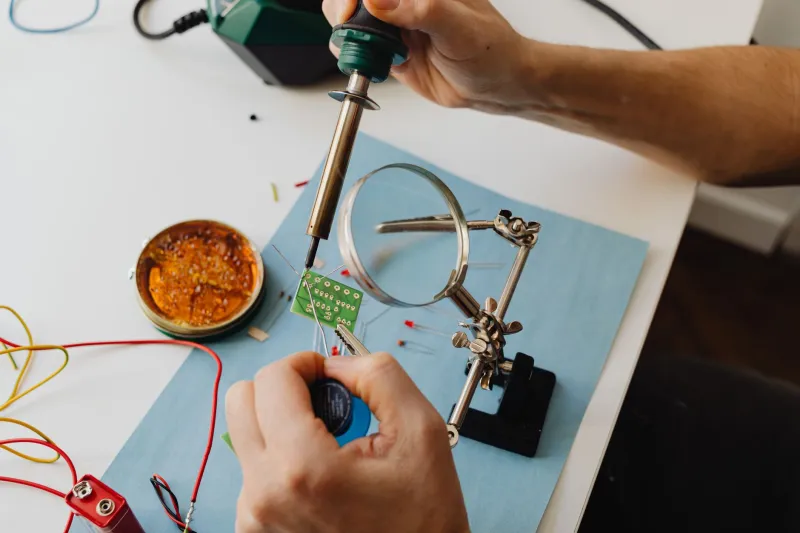
There's a room in Dale Hutchins' house in Dayton, Ohio that his wife has officially written off. It's not a home office or a den. It's an archive. Three flatbed scanners, a rack of decommissioned VCRs, a Super 8 telecine rig he built himself from a projector and a Raspberry Pi, and roughly four hundred reels of other people's family memories stacked in labeled banker's boxes.
Dale doesn't charge anyone a dime. He's not a business. He's something stranger and, if you talk to him long enough, something kind of beautiful: an amateur archivist with a calling nobody assigned him.
"I started with my own dad's reels," he told me over the hum of a projector. "Then his brother's. Then a guy at church asked if I could do his mom's wedding tape, and it just snowballed. Now I get boxes in the mail from people I've never met."
The Free Labor Nobody Sees
Dale is far from alone. Scattered across Facebook groups, Reddit threads like r/Archivists, and loose regional networks, a small army of hobbyists has taken up work that professional transfer services charge hundreds — sometimes thousands — of dollars to do. They digitize neighbors' slide carousels, rescue water-damaged VHS-C tapes from garages, and painstakingly clean 50-year-old 8mm film with a lint-free cloth and steady hands.
The economics are simple: a professional lab might charge $20 a reel. A retired guy with a scanner and time on his hands charges zero. What he asks for instead is patience, coffee, and the occasional donated piece of equipment when someone's aunt passes away and leaves a projector on the curb.
And the material keeps coming. Every week, another generation of Americans inherits shoeboxes of unmarked film. The reels have handwritten labels like "Summer?" or "Him." The tapes have no labels at all. Somebody has to look at them.
Watching Strangers' Memories
Here's the part the hobbyists don't always talk about at parties: to digitize a reel, you have to watch it. All of it. Birthday parties from 1974. Beach trips. A toddler's first steps, filmed by a parent who almost certainly isn't alive anymore.
"You become a witness to somebody's whole life," Dale said. "I've watched three generations of one family grow up across a single box of reels. I've seen funerals. I've seen a couple's anniversary dinner two years before the divorce nobody mentioned. You can't unsee it."
That intimacy raises real ethical questions, and the serious archivists in this world take them seriously. Community norms have developed organically: never post identifiable footage online without permission, blur faces and street signs if you share a clip, and if you find something truly private — and they do — you tell the owner and then you forget it.
"The rule is you're a custodian, not a consumer," one archivist in Georgia told me. "This isn't content. It's somebody's grandmother."
The Hard Question: What If Nobody Cares?
But the thorniest dilemma isn't privacy. It's indifference.
Archivists describe a recurring scenario: a well-meaning adult child drops off a parent's entire visual life, asks for "whatever's easy," and never picks up the files. Follow-up emails go unanswered. The digitized memories sit on a hard drive in a stranger's basement, saved from decay but saved for no one.
"I've got terabytes of footage I can't give back," Dale admitted. "People say they want it preserved. What they actually want is to not be the one who threw it away. Those are different things."
Some archivists have started setting terms up front: if the family doesn't respond within a year, files get deleted. Others keep everything, unwilling to be the last line between a memory and oblivion. There's no consensus — just a quiet, ongoing argument about obligation, sentiment, and how much of the past we're actually required to carry.
Why Bother?
Ask any of these folks why they do it, and the answers circle back to the same idea. It's not nostalgia exactly, and it's definitely not money. It's the moment when a woman in her seventies watches her mother's face move on screen for the first time in forty years and grabs the archivist's arm.
"You can't buy that," Dale said. "The lab sends you a link. I hand you a tissue and sit with you while it plays."
The professional transfer industry is booming, and good — the reels are dying faster than hobbyists can save them. But there's a stubborn, unscalable human element in what these basement archivists do that no service can replicate. They're not just converting formats. They're volunteering as the audience for lives that would otherwise play out to an empty room.
Somewhere in a banker's box in Dayton, there's a reel labeled only "Christmas." Somebody made it. Somebody developed it. And for now, at least, somebody cares enough to keep it moving.